The Nissan GT-R has always held a legendary place in automotive culture, earning the nickname “Godzilla” for its monstrous acceleration and track-ready dominance. After years of anticipation and speculation, the 2026 Nissan GT-R R36 concept has finally been revealed, and it confirms that the legend is not only returning but evolving to new heights. The R36 marks a dramatic shift in styling, aerodynamics, and power delivery, signaling a futuristic approach while staying true to the GT-R’s racing DNA. It’s aggressive, intimidating, driver-focused, and engineered to break barriers in the world of supercars once again.
What is the design philosophy behind the 2026 Nissan GT-R R36
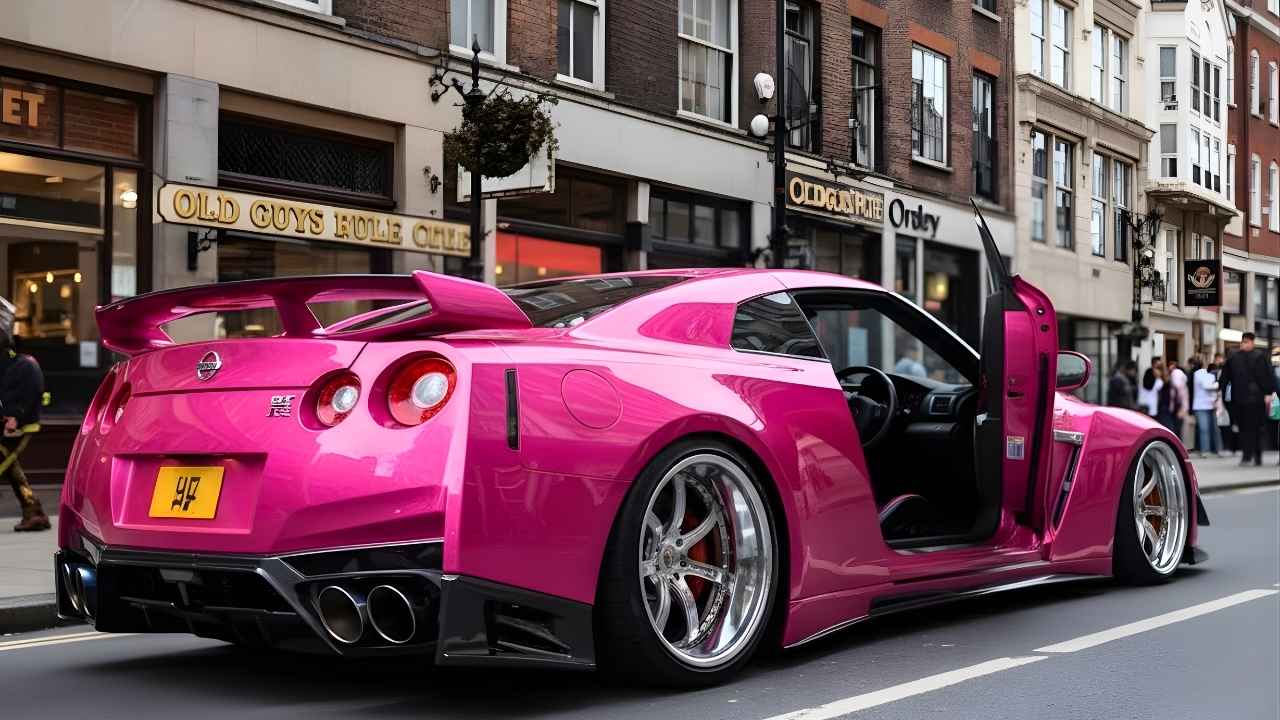
The R36 concept takes inspiration from Japanese cyberpunk aesthetics while retaining sharp GT-R heritage cues. The body is sculpted with dramatic cuts, deep air channels, and angular surfaces designed for both visual impact and performance. The classic quad round taillights return, embedded within a futuristic LED signature that immediately identifies the silhouette as a GT-R, even from a distance. The front fascia features a large aerodynamic grille with active shutters, sharp V-motion lighting, and a low stance built for maximum airflow. Every part of the design has been shaped to cut drag, increase downforce, and optimize cornering speeds.
The wide fenders, low roofline, and stretched wheelbase contribute to improved stability at high speed. The car sits on ultra-light forged wheels wrapped in performance tires, while the rear diffuser and dual-level spoiler help plant the car firmly on the track. The cabin continues the modern transformation with a minimalist racing-inspired layout, carbon fiber panels, digital instrument clusters, and deep bucket seats crafted to support the driver during extreme G-forces. The GT-R R36 shows a clear balance between futuristic supercar presence and functional race-bred aerodynamics.

When the next-gen powertrain redefines performance for the GT-R R36
The GT-R has been praised for decades for its twin-turbocharged engine, and the R36 continues that tradition with a new high-output twin-turbo V6 paired with electrified hybrid technology. Nissan designed the hybrid system not for fuel savings, but for instant torque delivery and performance enhancement. With electric assistance filling gaps in turbo spool and throttle response, the R36 launches off the line with explosive acceleration.
Early performance projections suggest power figures exceeding 800 horsepower and a 0–100 km/h time that can challenge the fastest hypercars on the market. Power is distributed through an advanced all-wheel-drive system tuned for precision and adaptability on both street and track. Nissan has optimized the cooling system, drivetrain efficiency, and gearbox response to maintain consistent performance in long-distance and high-temperature conditions. The hybrid configuration also enables short bursts of electric-only silent mode for city driving, though this GT-R has clearly been built with performance as the main priority.
How the GT-R R36 combines handling, aerodynamics and driver control
Handling has always been a defining trait for the GT-R, and the R36 takes precision a step further. Nissan incorporated a newly engineered active suspension system capable of making micro-level adjustments per millisecond based on speed, road conditions, and steering angle. This creates an intense feeling of being connected to the road, no matter the driving environment.

Aerodynamics play a major role in how the R36 performs. Airflow tunnels along the sides and underbody reduce turbulence, while the large diffuser stabilizes the rear end under hard braking and cornering. The car’s center of gravity has been lowered, and weight distribution has been optimized to enhance traction and agility. Multiple drive modes allow the driver to switch between road comfort, race setting, drag launch, and wet surface mapping, ensuring the GT-R adapts to every scenario.
Inside, driving control takes priority. Steering feedback is sharp and responsive, gear shifts are quick and aggressive, and digital data—from tire temperature to G-force logs—helps drivers push the car to its limits with confidence. The R36 is not simply fast in a straight line; it has been engineered as a track weapon that rewards skill and precision.
What the return of the GT-R symbolizes for the future of performance cars
The R36 represents more than just the next chapter of the GT-R lineage. It shows that the world of performance cars is evolving without abandoning passion and emotion. While many performance brands have shifted fully to electric platforms, Nissan has chosen a middle path that combines electrification with the raw intensity of combustion power. The result is a machine that maintains the iconic GT-R personality while preparing for the future of speed.
For longtime GT-R fans, the return of Godzilla is a moment of excitement and nostalgia. For younger supercar enthusiasts, the R36 introduces a bold new way of thinking about engineering and racing technology. It stands as a reminder that supercars can be extreme, character-filled, and emotionally engaging in the modern era.
Conclusion
The 2026 Nissan GT-R R36 concept is a thrilling preview of what the next generation of performance will look like. It blends radical design, hybrid twin-turbo power, and advanced handling technology to push the legacy of the GT-R into the future while keeping its raw racing spirit intact. If the production model remains true to this concept, the R36 could redefine the supercar segment once again—and Godzilla will reclaim its throne.